
You can sell your ecommerce business once you can prove trailing earnings and show that it runs without you doing every task. Start with three things now: tidy your books, estimate value from seller’s discretionary earnings (SDE) or EBITDA and a multiple, and check tax reliefs and VAT treatment. Our ecommerce accountants can speed up all three.
Key Takeaways
To successfully sell an ecommerce business, sellers must prepare thorough financial records, prove steady earnings, and ensure compliance with tax and VAT regulations.
| Point | Details |
|---|---|
| Organize your sale documents | Prepare a complete sale-readiness pack including recent accounts, standard operating procedures, and key asset registers. |
| Value your business accurately | Calculate valuation by adjusting recent profits with owner pay and expenses, then multiply by a defensible multiple. |
| Ensure compliance with tax rules | Check eligibility for Business Asset Disposal Relief and confirm VAT treatment to avoid costly mistakes. |
| Reinforce data protection and liabilities | Disclose customer data lawfully and review historic VAT records to prevent hidden liabilities during due diligence. |
| We support your sale process | Our team helps prepare financials, advise on taxes, and assemble sale documents to maximize your business value. |
Table of Contents
- What do buyers check first when you sell an online store?
- How do buyers value an ecommerce business?
- How do you clean the books and prepare the financial pack?
- What tax do you pay when you sell: Capital Gains Tax and BADR?
- Is VAT charged when you sell the business? Transfer as a going concern
- What does due diligence look for: data protection and hidden liabilities?
- How long does a sale take, and what does it cost?
- What should you plan for after the sale?
- What deal structures and payment terms are common?
- What legal points matter: contracts and intellectual property?
- How can you raise your value before you sell?
- An ecommerce accountant’s view on selling
- How can our team help you prepare for a sale?
- FAQ
- Sources
What do buyers check first when you sell an online store?
Buyers open with your numbers and your paperwork. A seller who hands over a tidy pack on day one keeps negotiating power. A seller who scrambles for documents invites a price cut.
Build your sale-readiness pack around these items:
- A recent profit and loss account, reconciled to bank statements and platform reports from Amazon, Shopify, eBay or wherever you trade.
- Written standard operating procedures for order fulfilment, returns, supplier ordering and customer service scripts.
- A register of key assets: domains, trademarks, social accounts, inventory, supplier agreements and platform logins.
- A clear view of revenue concentration, either showing sales across several channels or explaining honestly why one channel dominates.
- A concise sale pack: a financial summary on top, with the supporting documents in an appendix.
Revenue concentration deserves extra thought. If much of your income comes from one marketplace account, a buyer will worry about a suspension, and they may price that worry into their offer. Showing how you would diversify, even if you have only started, gives them something to work with.
Pro Tip: Name every file the way a stranger would search for it (“2025-26 VAT returns”, not “final v3”) and keep one index sheet listing everything in the pack.
Our guide to accounting tips for Amazon FBA sellers covers the platform reconciliations that feed straight into this pack.
How do buyers value an ecommerce business?
Most buyers of small online businesses price on earnings. For owner-operated shops, the usual measure is SDE: net profit with the owner’s salary, drawings, one-off costs and personal expenses added back. For larger businesses with a management team in place, buyers lean towards EBITDA: earnings before interest, tax, depreciation and amortisation.
The choice follows who does the work. If you are the business, buyers need SDE to see what a single working owner could earn. If a manager runs it day to day, EBITDA is fairer because the salary cost stays.
Valuation then applies a multiple to that earnings figure. Multiples move with size, growth, margin quality, channel spread and how well the business runs without you. Published ranges vary widely between brokers, and none is a rule, so treat any quoted range as a starting point for conversation rather than a promise.
Here is how to build your estimate:
- Take recent net profit from your reconciled accounts.
- Add back your own pay and drawings, personal costs run through the business, and genuine one-off expenses.
- Strip out one-off income, such as a clearance sale or a refunded fee.
- Record each adjustment on a schedule with the evidence behind it.
- Multiply the result by a defensible multiple and test the answer against a lower and a higher multiple.
A worked example can show how the calculation works: start with net profit, add back owner pay, personal costs and genuine one-off expenses, then multiply the result by a defensible multiple. The spread between a lower and higher multiple gives you a negotiating range to consider.
Buyers challenge add-backs hardest. Every adjustment needs a receipt, an invoice or a bank line behind it. An add-back you cannot prove simply disappears in due diligence, and the price falls with it.
Tax relief matters to your net result more than many sellers expect. Business Asset Disposal Relief can allow eligible sellers to pay 18% Capital Gains Tax on qualifying gains for disposals from 6 April 2026, so check it before you set a price you are happy to accept.
How do you clean the books and prepare the financial pack?
A buyer’s accountant will ask for the same core documents every time. Having them ready before you list shortens due diligence and keeps the buyer’s confidence high.
Prepare these records:
- Profit and loss account and balance sheet for recent years, plus a current year to date.
- Bank statements and merchant account statements, matched to the accounts.
- VAT returns and the working papers behind them.
- Sales reports from each platform, exported in full.
- Filed company tax returns and, where relevant, your personal tax returns.
The test buyers apply is simple: does platform revenue tie to bank receipts? Marketplaces pay out net of fees, refunds and reserves, so platform sales rarely equal what lands in your bank. Reconcile each channel monthly in Xero or your accounting system: gross sales, less fees, less refunds, equals payout. Keep a short adjustments schedule explaining every gap. Our bookkeeping services do exactly this kind of reconciliation month by month.
Treat these items consistently:
- Owner’s drawings and salary: show them clearly, then add them back on the SDE schedule.
- Related-party costs: if a family member is paid above or below market rate, show the market-rate figure alongside the actual one.
- One-off expenses: label them as one-off and attach the invoice.
Numbers alone do not carry a sale. Add a short narrative that explains what drives growth, which product lines earn the best margin, how repeat customers behave and what changed in any unusual month. A dip in March that the buyer cannot explain looks like a risk. The same dip explained by a supplier delay, with the invoices to prove it, looks like a story. Buyers pay more for businesses they understand.
If your records are behind, fix that before anything else. Our guide on ecommerce accounting sets out what good records look like for an online seller.
What tax do you pay when you sell: Capital Gains Tax and BADR?
Selling a business or its assets may create a capital gain, and Capital Gains Tax (CGT) may apply unless a relief reduces or removes it. For many sellers, the relevant relief is Business Asset Disposal Relief (BADR).
According to GOV.UK, BADR can let eligible sellers pay 18% CGT on qualifying gains for disposals from 6 April 2026, with a lifetime limit of £1 million of gains. Conditions apply, and you should not assume you qualify.
Key point: the £1 million lifetime limit applies across all your qualifying disposals, not per sale, so earlier claims reduce what remains. The GOV.UK eligibility guidance states the limit and the conditions.
Points to check before you agree a timetable:
- Individuals generally must have owned the business, or the shares, for at least two years before the sale.
- The business must be a trading business, and your role in it must meet the stated conditions.
- You claim through Self Assessment or by completing the helpsheet; the how to claim guidance lists the deadlines, including 31 January 2028 for 2025 to 2026 disposals.
- Whether you sell shares in a limited company or the assets of a sole trade changes which rules and reliefs apply.
- Other reliefs, such as Business Asset Rollover Relief, may matter if you reinvest in qualifying assets; GOV.UK sets out the available CGT reliefs for businesses.
Timing can change the bill. Selling before you meet the ownership-period condition, or in a different tax year, may produce a different result. Confirm eligibility with an accountant before you fix a completion date. Our article on when you need an accountant for Capital Gains Tax explains where professional input pays for itself.
Is VAT charged when you sell the business? Transfer as a going concern
In many cases, no. When a sale qualifies as a transfer of a business as a going concern (TOGC), the transfer is outside the scope of VAT and no VAT should be charged on the assets. HMRC’s VAT Notice 700/9 says the TOGC rules are compulsory where the conditions are met, so a seller cannot simply choose to charge VAT. You need to establish from the outset whether your sale is a TOGC.
The central test is that the buyer takes over a business that keeps trading as the same kind of business, rather than buying a pile of assets to use differently. Registration status also matters. The VAT registration threshold is £90,000, and the Value Added Tax Act 1994 sets out when a person who takes over a business can become liable to register.
Practical steps for sellers:
- Decide early whether the sale will be treated as a TOGC, and say so in writing in the heads of terms and the sale contract.
- Ask the buyer for evidence of their VAT registration position, or confirmation that they will register where required.
- Keep a record of how you reached your decision, because an HMRC enquiry may arrive years later.
- Do not issue a VAT invoice for assets covered by the TOGC treatment.
- Tell your accountant before signing, so your final VAT return and any deregistration are handled correctly.
Getting this wrong is expensive. Charging VAT where none was due causes a dispute with the buyer, and failing to charge it where it was due leaves you with a bill. If your business sells into the EU, tell us about any OSS or IOSS registrations too, since those need closing or transferring correctly.
What does due diligence look for: data protection and hidden liabilities?
Two areas catch sellers off guard: customer data and historic VAT.
Your customer list is usually a major asset, and it is also personal data. Under UK GDPR, handing it to a buyer is a form of data sharing, so you need a lawful basis, clear records and, where required, notice to the people concerned. The Information Commissioner’s Office (ICO) sets out the checks in its due diligence guidance for mergers and acquisitions, including identifying what data transfers, establishing the lawful basis and documenting the sharing. The ICO’s main site is the place to start if you have not handled a data transfer before.
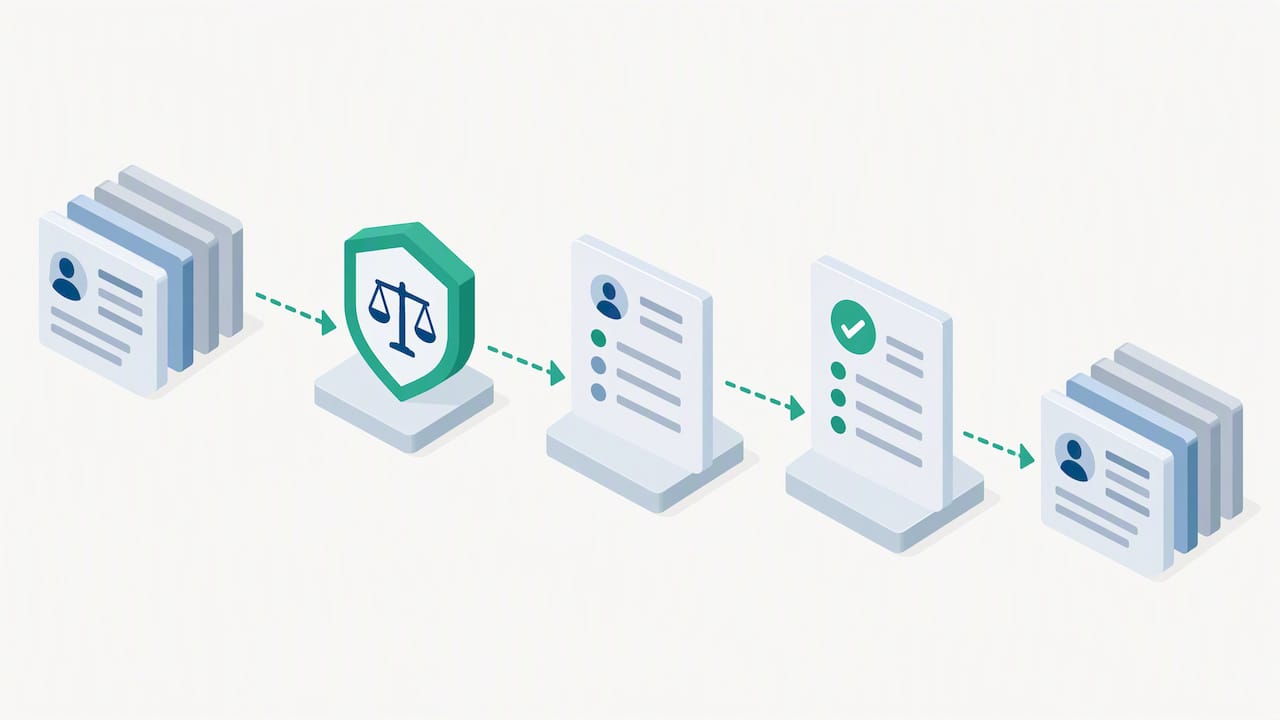
Historic VAT is another potential hidden liability. Buyers will look at when you registered, whether you charged VAT correctly across channels and countries, and whether returns were filed on time. Unpaid VAT can stay with you after the sale, depending on how the deal is structured.
Prepare for both:
- Write down your lawful basis for transferring customer data, and keep your privacy notices to hand.
- Collect VAT registration certificates, returns and any correspondence with HMRC.
- Agree what warranties you can honestly give, and carve out anything you know is a problem.
- Build an open issues schedule listing known problems, such as a late return or a disputed supplier invoice.
Disclosing a known problem up front costs you a conversation. Hiding it and having the buyer find it costs you the deal, or a claim under your warranties after completion.
How long does a sale take, and what does it cost?
Expect several months from starting preparation to completion. The listing and negotiation stages are often quicker than the preparation and due diligence either side of them, and missing documents are the commonest reason a timetable slips.
Budget for these professional costs, because they come out of your net proceeds:
- Accountancy and tax advice, covering valuation support, the sale pack and CGT planning.
- Solicitor fees for the sale contract, warranties and intellectual property assignments.
- Broker or marketplace fees, if you use an intermediary.
Preparation is the cheapest way to protect your price. A buyer who finds clean books, clear contracts and a complete document set has fewer reasons to renegotiate late in the process, and late renegotiation is where most discounts happen.
What should you plan for after the sale?
The sale is not the end of your tax work. Plan the after-sale position before you sign, not after the money arrives.
Set aside the CGT due, using your expected relief position, and diarise the Self Assessment deadline for the tax year of the sale. If your sale price is paid in instalments or includes an earn-out, tax timing may follow different rules, so ask your accountant how each payment is treated.
Then decide what the proceeds are for. Some sellers reinvest in a new venture, and in some cases reliefs such as Business Asset Rollover Relief may apply when qualifying assets are replaced; check the conditions first. Others move proceeds into pensions, savings or property, where the tax treatment differs again. Keep a reserve for any warranty claims during the period your contract allows them.
Do not forget the closing admin: final VAT return, deregistration if the business is not carrying on, final payroll, and a decision on whether to wind up or keep the company. A tidy exit leaves nothing for HMRC to chase later.
What deal structures and payment terms are common?
Online business sales commonly use different deal structures. In an asset sale, the buyer picks up the store, stock, domains, accounts and contracts. In a share sale, the buyer takes the whole limited company, including its history. Buyers often prefer asset deals because they leave old liabilities behind; sellers with a company often prefer share sales because the tax can be simpler. The right choice depends on your facts, and it changes the CGT and VAT analysis above.
Payment terms vary just as much:
- Full payment on completion is simplest, though buyers often discount for it.
- A deferred payment spreads the price over agreed dates, which leaves you exposed to the buyer’s performance.
- An earn-out ties part of the price to future sales or profit, so it rewards a smooth handover and punishes a messy one.
- A retention or escrow holds back part of the price against warranty claims.
- Stock is commonly priced separately, at cost on a stock count at completion.
Pay close attention to handover terms. Buyers often ask the seller to stay on for a transition period to introduce suppliers and explain processes. Agree the length, the pay and the scope in writing, so a goodwill gesture does not turn into an unpaid job.
What legal points matter: contracts and intellectual property?
Your solicitor will draft the sale agreement, but you can make their work easier by gathering the facts early. Contracts and intellectual property (IP) are where mistakes cost most.
Check which contracts can transfer. Supplier agreements, warehouse and fulfilment terms, software subscriptions and platform seller accounts often contain clauses that restrict assignment or need consent. Some marketplaces do not allow account transfers at all, so the buyer may need to relaunch listings under their own account, with the reviews you have built forgotten. Find this out before price talks, because it changes what you are actually selling.
For IP, confirm that you own what you say you own:
- Trademarks and brand names: registered in your name, or the company’s, and not a former partner’s.
- Domains: held by you, not by a freelancer or agency.
- Product photos, descriptions and designs: created by you, or assigned to you in writing.
- Custom software or storefront code: written under an agreement that gives you ownership.
Transfer works through written assignments, domain transfers and account handover steps, completed in a planned order at completion. Add a non-compete clause only if you are comfortable with it, since buyers often ask for one, and read the duration and scope carefully.
How can you raise your value before you sell?
Buyers pay for earnings that look safe and repeatable, so the best preparation reduces risk. Allow plenty of time if you can, because buyers judge trends, not a single good month.
Work on these in order of impact:
- Reduce dependence on you: document processes, delegate supplier contact and train someone to handle customer service.
- Improve customer retention: build an email list, offer a repeat-purchase incentive and track repeat rates by cohort, so you can show the figures.
- Spread your channels: add a second marketplace or your own storefront so no single platform can sink the business.
- Fix the margin leaks: renegotiate supplier terms, cut slow-moving stock and review shipping costs.
- Tidy stock: clear dead stock before the sale, since buyers value it at cost or less.
- Close admin gaps: file everything on time, resolve any HMRC queries and update the accounts monthly.
Resist cosmetic fixes that do not hold up under scrutiny. A sudden spike in profit from a short-term cut to marketing will be spotted and reversed in the buyer’s model. Steady, explainable improvement is worth more than a clever trick.
An ecommerce accountant’s view on selling
Most sellers do not lose money because of tax rates. They lose it to surprises. A buyer finds an unreconciled Amazon payout, a supplier contract nobody signed, or a VAT question that nobody can answer, and the offer drops. Each one was avoidable months earlier.
My view is that sellers underestimate how much a buyer’s confidence is worth. A business with ordinary profit and spotless records often sells faster and for more than a better business with messy ones. The honest starting steps are dull but powerful: reconcile every platform to the bank, write down your supplier terms, and check whether you qualify for BADR before you fix a date.
Engage an accountant before you list the business, not after you receive an offer. By then the clock is running and every question costs you leverage.
— Kris
How can our team help you prepare for a sale?
We are ecommerce accountants, and a sale pack is the sort of work we do. Every client has a dedicated accountant, and we support you with your books, profit and loss account, and platform reconciliations.
Here is how we help in practice: we prepare monthly bookkeeping and reconciliations across your sales channels, advise on VAT and IOSS positions, help you plan for Capital Gains Tax and BADR, and put together the financial section of your sale pack. Our all-inclusive plans start from £29 + VAT a month, and you can see what is included on our ecommerce accountants page.

Ready to start? Get in touch through our ecommerce accountants page, tell us when you hope to sell, and we will tell you what to tidy first.
This article is general information, not a substitute for advice from a qualified financial advisor. Consult a qualified financial professional about your own circumstances before acting on anything here.
FAQ
Is a business worth a multiple of its profit?
Not automatically. A higher multiple can fit some small businesses, but the right figure depends on size, growth, margin quality and how well the business runs without you. Always apply the multiple to normalised earnings, such as SDE or EBITDA, rather than to raw net profit.
How quickly can an ecommerce business be sold?
Plan for several months from preparation to completion. Missing documents and unresolved tax questions are the usual causes of delay, so clean books and a complete sale pack shorten the timetable.
How do I work out what my business is worth?
Start with recent net profit, add back owner pay, personal costs and one-off expenses to reach SDE or EBITDA, then apply a defensible multiple. Test your result against a lower and a higher multiple to see a realistic range.
What is the best way to sell a small business?
Prepare first: reconcile your books, document your processes and check your tax position, including BADR and VAT treatment. Then choose between selling privately, through a marketplace or via a broker, and use a solicitor to handle the contract.