
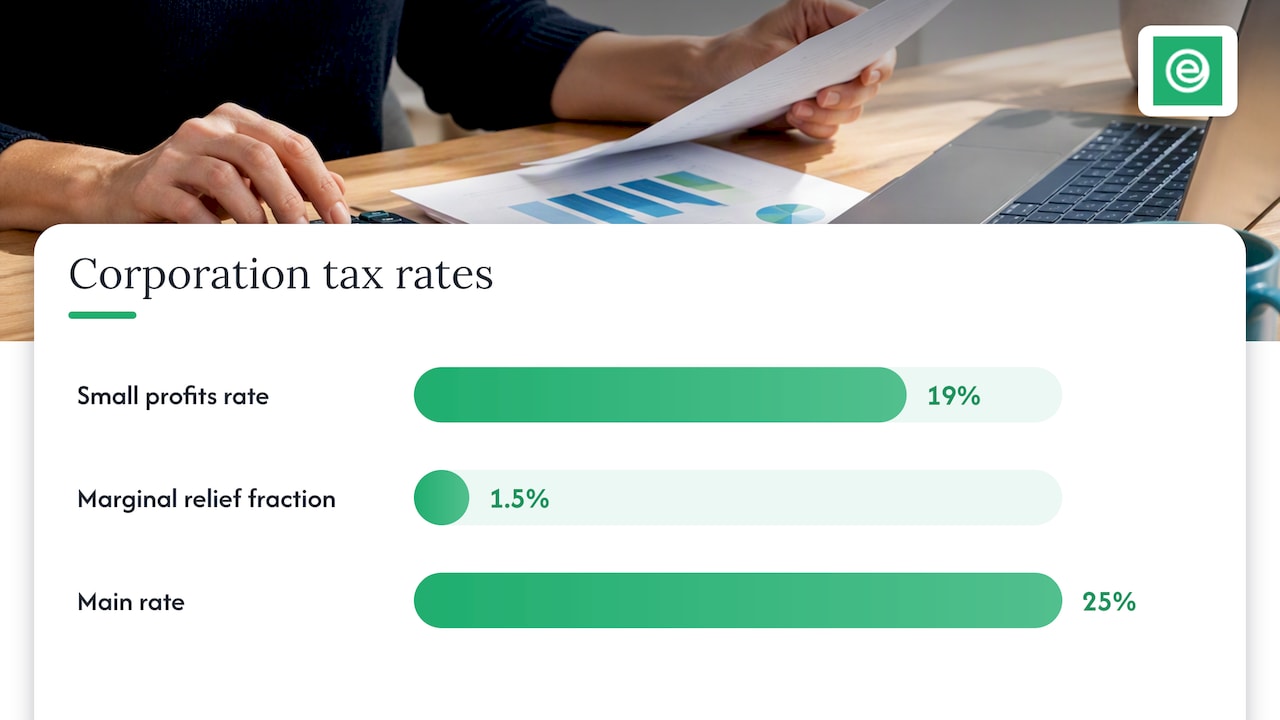
The main rate of corporation tax is 25% for profits over £250,000, and the small profits rate is 19% for profits of £50,000 or less. Between these two limits, Marginal Relief tapers the rate using a 3/200ths fraction, and from 2026 the capital allowances regime also changes, with the main Writing Down Allowance being reduced and a new First Year Allowance introduced for qualifying spend. Always check GOV.UK for the current detail before filing.
TL;DR:
Most companies can reduce their effective tax rate by timing profits and capital expenditures within the £50,000 to £250,000 Marginal Relief band.
The current Marginal Relief fraction remains at 3/200ths, with calculations straightforward but prone to rounding errors, so HMRC’s calculator is recommended.
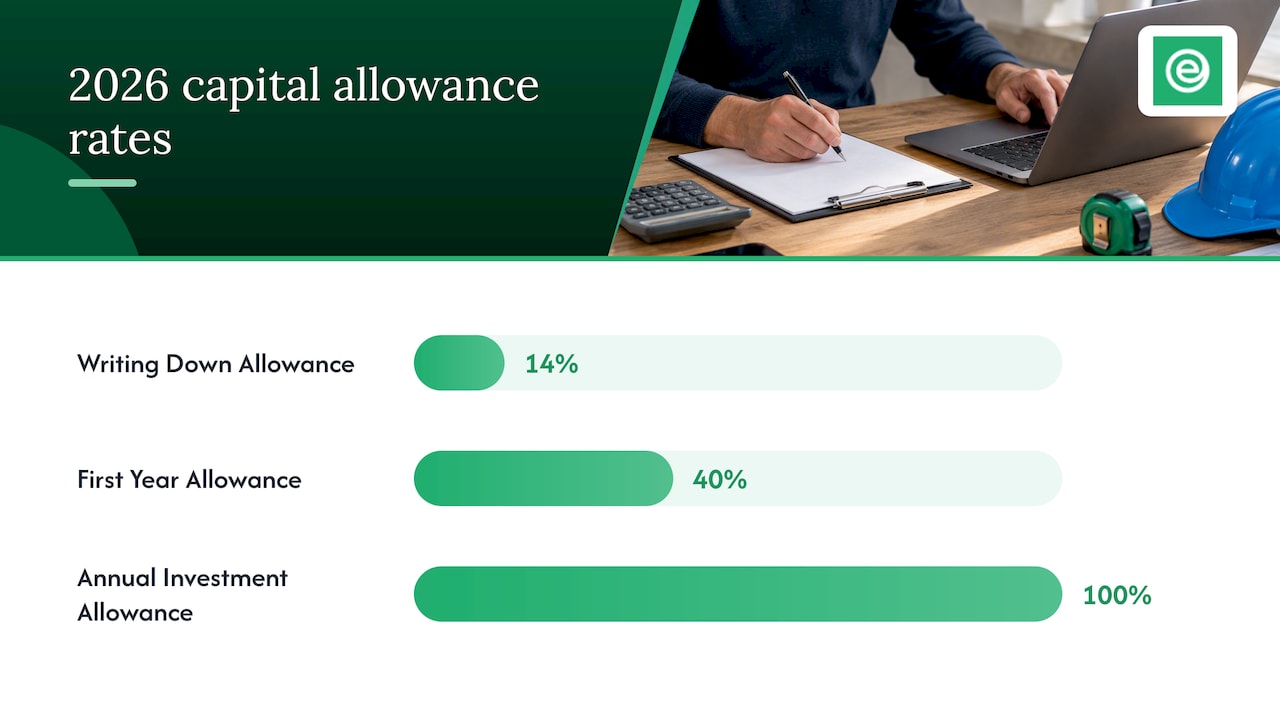
Changes from 2026 will lower the main capital allowances rate to 14% and introduce a 40% First Year Allowance for qualifying assets, affecting cash flow planning.
Large companies exceeding a taxable profit of £1.5 million must pay quarterly instalments, with earlier deadlines for the most profitable firms.
Careful forecasting and active management of timing are essential to avoid unintended jumps to the 25% rate, especially when profits are near thresholds.
Table of Contents
-
Current rates and thresholds: how the 19% and 25% bands apply
-
Getting your corporation tax forecasting right with eAccounts
Current rates and thresholds: how the 19% and 25% bands apply
Every UK limited company falls into one of three positions depending on taxable profit, not turnover. The thresholds are fixed by law and apply per company, scaled down when a company has associated companies or a short accounting period.
-
Small profits rate: 19% applies where taxable profits are £50,000 or less.
-
Main rate: 25% applies where taxable profits exceed £250,000.
-
Marginal Relief band: profits between £50,000 and £250,000 are taxed at 25% then reduced by a sliding relief.
According to HMRC’s published rates and allowances, the standard Marginal Relief fraction is 3/200ths, and this figure has held steady since the current rate structure was introduced, giving directors a stable number to plan around.
When an accounting period straddles 1 April, the rate change date, you cannot simply apply one rate to the whole period. Profits are time-apportioned between the two financial years, and each portion is taxed at the rate (or relief) that applied in that year. This matters most for companies with a non-calendar year end, where part of the period sits either side of the boundary.
Ring-fenced profits from oil and gas extraction follow separate rates and reliefs entirely, set out in dedicated GOV.UK guidance rather than the general corporation tax pages. If your company has upstream oil and gas activity, treat the mainstream rates in this article as background only and consult the specific ring-fence rules.
How marginal relief works and how to calculate it
Marginal Relief exists so that companies with profits just above £50,000 do not jump straight to an effective 25% charge. The formula HMRC uses is:
Marginal Relief = (Upper Limit − Taxable Profits) × (Taxable Profits ÷ Taxable Profits) × 3/200
In practice, accountants simplify this to: (£250,000 − profits) × (augmented profits ÷ profits) × 3/200, then deduct the result from the tax calculated at the main rate. Here is the method step by step:
-
Calculate tax at the main rate: taxable profits × 25%.
-
Work out the relief: (£250,000 minus taxable profits) × 3/200.
-
Subtract the relief figure from the main rate tax to get the amount payable.
-
Divide the final tax by taxable profits to see your effective rate.
Conflating the two leads directors to overestimate their company’s actual liability.
Pro Tip: Run your figures through HMRC’s Marginal Relief calculator before finalising a forecast, since manual arithmetic on the fraction is an easy place to make a rounding error.
Capital allowances and reliefs: the 2026 changes explained
From 2026, two capital allowance changes affect how much of your capex you can set against taxable profits. According to GOV.UK’s capital allowances update, the main rate Writing Down Allowance for plant and machinery drops from 18% to 14% for chargeable periods beginning on or after 1 April 2026, while a new 40% First Year Allowance applies to qualifying expenditure incurred on or after 1 January 2026.
-
Writing Down Allowance: reduced to 14% for periods starting on or after 1 April 2026.
-
New First Year Allowance: 40% for qualifying plant and machinery spend from 1 January 2026.
-
Annual Investment Allowance and full expensing: continue to operate alongside the new FYA, so most smaller companies will still claim 100% relief on qualifying spend up to the AIA limit before the new allowance becomes relevant.
For companies whose accounting period spans either change date, allowances are apportioned on a hybrid basis, a detail covered directly in HMRC’s guidance rather than left to interpretation. You claim capital allowances through the Company Tax Return (form CT600), not automatically, so unclaimed pools simply carry forward and delay relief rather than disappear.
Specialist commentary from ForrestBrown on capital allowances notes that the government has signalled rate stability for the duration of the current Parliament, which gives some comfort for multi-year investment planning even as the allowance mechanics shift.
Payment deadlines and instalment rules
Most companies pay corporation tax 9 months and 1 day after the end of their accounting period, provided taxable profits are £1.5 million or less, as confirmed by GOV.UK’s payment guidance. Miss this date and interest accrues from the day after the deadline.
Companies with higher taxable profits must pay by quarterly instalments, estimating liability in advance of filing. Very large companies with very high annual taxable profits follow a stricter instalment timetable with earlier payment dates, as set out in HMRC’s guidance for very large companies. A small-liability exception removes the instalment obligation for companies whose total liability falls below a certain threshold, even if they would otherwise qualify as large.
To stay compliant without cashflow surprises:
-
Estimate your likely liability as soon as management accounts allow, not just at year end.
-
Set calendar reminders for instalment dates if you cross the £1.5 million threshold.
-
Reconcile the estimate against actual liability once accounts are finalised, adjusting the final payment accordingly.
Pro Tip: Build a rolling quarterly profit forecast if you are close to the £1.5 million threshold, since crossing it mid-year changes your payment pattern for the whole period.
Worked examples: what the numbers look like in practice
These examples use illustrative figures only, intended to show the mechanics rather than represent typical results for any particular business.
-
Example A, profits of £40,000: this sits below the £50,000 small profits threshold, so the full amount is taxed at 19%, giving tax payable of £7,600.
-
Example B, profits of £150,000: tax at the main rate would be £150,000 × 25% = £37,500. Marginal Relief is (£250,000 − £150,000) × 3/200 = £1,500. Tax payable is £37,500 − £1,500 = £36,000, an effective rate of 24%.
-
Example C, a company spending £30,000 on qualifying plant and machinery and claiming the new 40% First Year Allowance: the claim reduces taxable profit by £12,000, cutting tax payable by £12,000 × 25% (or 19%, depending on which band the remaining profit falls into).
| Scenario | Taxable profit | Rate mechanism | Tax payable |
|---|---|---|---|
| Example A | £40,000 | 19% small profits rate | £7,600 |
| Example B | £150,000 | 25% main rate less Marginal Relief | £36,000 |
| Example C | £30,000 capex claim | 40% FYA reduces taxable profit by £12,000 | Tax saving of up to £12,000 |
Adapt these by substituting your own profit figures into the same formula, and remember that group companies divide the £50,000 and £250,000 limits by the number of associated companies, which can push a profitable group into the Marginal Relief band far sooner than a standalone company of similar size.
Why directors underestimate the planning window
Most directors treat corporation tax as a year end task rather than a forecasting input. That is backwards. The Marginal Relief band means your effective rate shifts continuously as profit moves between £50,000 and £250,000, so a decision in month six, like timing a capital purchase or deferring income, can change your tax outcome more than anything done after the accounting period closes.
The capital allowance changes from 2026 reward early claiming discipline. Track plant and machinery pools actively, especially if your accounting period spans 1 April 2026, rather than leaving reconciliation to your accountant at filing time. Use HMRC’s own calculators for Marginal Relief and instalments, and bring in dedicated accountant support once associated company rules, group structures or large instalment obligations complicate the picture.
Getting your corporation tax forecasting right with eAccounts
We prepare Company Tax Returns, track capital allowance claims through rate changes, and build cashflow forecasts that alert you when you approach key corporation tax thresholds, helping ensure decisions are made proactively.

-
Company Tax Return filing handled by your dedicated accountant.
-
Capital allowance claims tracked against the 2026 rate changes.
-
Cashflow forecasting that flags Marginal Relief thresholds early.
Every client gets one accountant for ongoing support rather than a rotating queue. Explore our accounting packages from £29 per month to get a forecast and quote started.
This article is general information, not a substitute for advice from a qualified financial advisor. Consult a qualified financial professional about your own circumstances before acting on anything here.
FAQ
Is corporation tax 19% or 25%?
Both apply, depending on profit. Taxable profits of £50,000 or less are taxed at 19%, profits above £250,000 at 25%, and profits in between use Marginal Relief to taper between the two.
What will the corporation tax rates be in 2026?
The rates stay at 19% and 25% for the 2026 financial year, confirmed in the Finance Act 2025 clauses. What changes in 2026 is the capital allowances regime, not the headline rates themselves.
What is the 60% trap?
Within the Marginal Relief band, the effective corporation tax rate rises gradually towards 25% under the standard formula.
How do I avoid paying 25% corporation tax?
Keeping profits within the Marginal Relief band through timing of capital spend is a common, legitimate planning lever.
When is corporation tax due?
Most companies pay 9 months and 1 day after their accounting period ends, provided profits are £1.5 million or less. Companies above that threshold pay via quarterly instalments instead.